Abigail Adams exemplified Republican Motherhood.
Like Adams, you are
- unafraid to speak your mind
- the glue that holds people (and projects) together
- wise enough to lead and fun enough that people will follow
- clear-eyed about power and its dangers

Abigail Adams exemplified Republican Motherhood.

Healer
Abigail Adams by Benjamin Blyth, 1766. Massachusetts Historical Society.

Like Adams, you are

Abigail Adams’s husband and friends benefited from her infinite supply of good advice. The ultimate multi-tasker, she helped and educated people in her community; she was particularly invested in girls’ and women’s education. You are like Abigail Adams when you make your friends laugh and your rivals blush, and you take care of the people you love.
Political Advisor • Loving Wife • Women’s Rights Advocate
1744–1818
Massachusetts
Abigail Adams opposed tyranny in all forms. A critic of Parliament and the king, Adams was the hub of a revolutionary network that included friends like Mercy Otis Warren. She monitored the Revolution’s progress by requesting military updates from her husband, John Adams. She often gave him advice about how to strengthen his alliances within the Continental Congress.
Though happily married, Adams recognized that not all wives were so fortunate. With wit and frankness, she urged John Adams to support legal protections for wives against abusive husbands. She warned that “all men would be tyrants if they could.”
While John Adams was in Congress, Abigail Adams ran the family farm. She planted crops and crafted components for gunpowder and fertilizer (saltpeter). She nursed neighbors with smallpox. She raised four children to adulthood. The Adams household did not include enslaved people. In her opinion, slavery was yet another form of tyranny to despise.
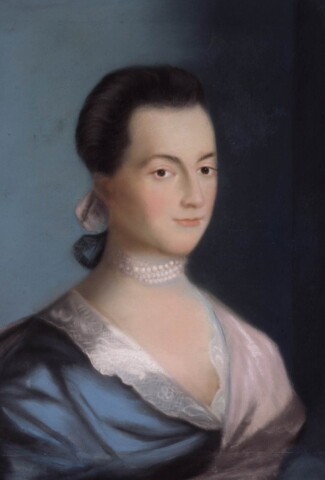
“In the new Code of Laws which I suppose it will be necessary for you to make I desire you would Remember the Ladies.”
Abigail Adams to John Adams, March 31, 1776. Image: Abigail Adams by Benjamin Blyth, 1766. Massachusetts Historical Society.
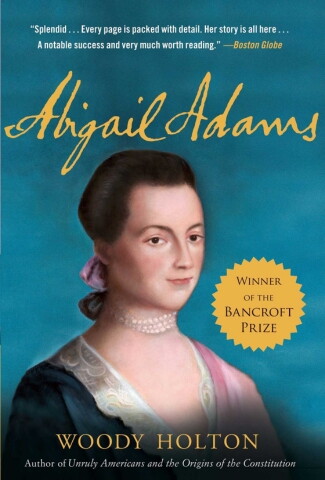
“Adams . . . shared her views on women’s rights with numerous correspondents, male and female, inside and outside her family.”
Woody Holton, Abigail Adams, 2009.
Take the quiz once to reveal your true historical nature . . . or take it multiple times to discover the many sides of revolution.
Image: Students performing in the Hamilton Education Program.


Explore the Declaration of Independence with notes that explain the meaning of certain words or phrases in a document, offering historical context and advice on what to look for when reading the document.

This program combines theatrical experiences with rigorous historical study and creative expression to make history engaging and accessible to students.

The Gilder Lehrman Institute is pleased to offer many opportunities for students throughout the year, encouraging the study of American history and supporting students in their career and research goals.