Button Gwinnett was governor of Georgia.
Like Gwinnett, you are
- eager to impress others
- ready to defend your audacious actions
- proud of your family and home
- not above back-stabbing your rivals
Button Gwinnett was governor of Georgia.

Rogue
Button Gwinnett attributed to Jeremiah Theus, ca. 1769. Private collection of William Fickling.

Like Gwinnett, you are

Button Gwinnett was impulsive and even reckless. This limited his fame . . . but ensured his notoriety. Modern Americans who are like Gwinnett probably won’t get into a duel, but might change opinions or loyalties very quickly. This could be a good thing if the change is an improvement. You are like Gwinnett when you have the spirit of carpe diem (seize the day).
Entrepreneur • Delegate to Continental Congress • Hot-Head
1735–1777
England | Georgia
Button Gwinnett was a latecomer to the Revolution. Arriving in Georgia in 1765, he tried and failed at a variety of business ventures. For example, he unsuccessfully ran a shop and fell into debt as a planter and slaveholder.
In 1775, Gwinnett rebranded himself as a passionate advocate for the Revolution. Georgia’s Provincial Congress selected him to lead a battalion in the Continental Army. However, the position was ultimately transferred to a rival, Lachlan McIntosh, as part of a political compromise. Gwinnett was sent to Philadelphia as a delegate to the Continental Congress. He sat on the committee that drafted the Articles of Confederation.
Gwinnett returned to Georgia to serve as the state’s governor. He then unnecessarily ordered Lachlan McIntosh to risk his life with an attack on British-held Florida and accused McIntosh’s brother of treason. When Lachlan McIntosh returned to Georgia in 1777, he challenged Gwinnett to a duel. Gwinnett lost.
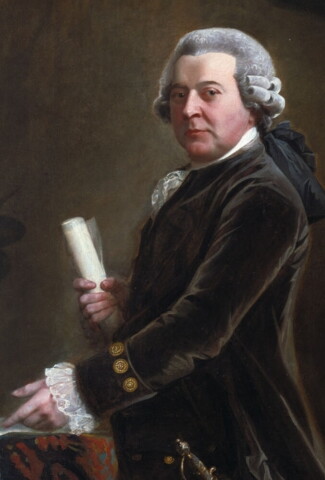
“Lyman Hall and Button Gwinnet appear as Delegates from Georgia: both intelligent and spirited Men, who made a powerful Addition to our Phalanx.”
John Adams’s diary, May 20, 1776. Image: John Adams by John Singleton Copley, 1783. Harvard University Portrait Collection.
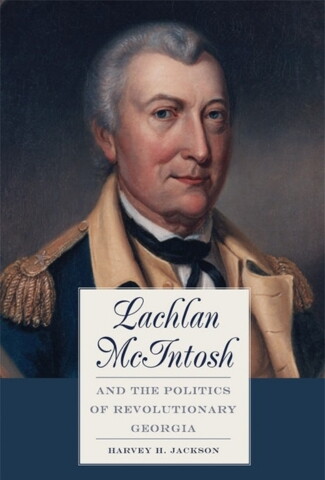
“Revolutionaries seldom rise from the ranks of the contented, and the most volatile are the ambitious whose ambitions are thwarted. Gwinnett came to Georgia seeking what England denied him, prosperity and status.”
Harvey H. Jackson, Lachlan McIntosh and the Politics of Revolutionary Georgia, 1979.
Take the quiz once to reveal your true historical nature . . . or take it multiple times to discover the many sides of revolution.
Image: Students performing in the Hamilton Education Program.


Explore the Declaration of Independence with notes that explain the meaning of certain words or phrases in a document, offering historical context and advice on what to look for when reading the document.

This program combines theatrical experiences with rigorous historical study and creative expression to make history engaging and accessible to students.

The Gilder Lehrman Institute is pleased to offer many opportunities for students throughout the year, encouraging the study of American history and supporting students in their career and research goals.