James Madison advocated for good governance and the Constitution.
Like Madison, you are
- thoughtful and analytical—you are good at spotting errors
- someone who thinks before they speak
- skilled at finding compromise
- good at turning ideas into action
James Madison advocated for good governance and the Constitution.

Visionary
James Madison by James Vanderlyn, 1816. White House Historical Association.

Like Madison, you are

James Madison was patient and insightful. He studied the best way to build a government. Modern Americans value Madison’s contributions to republican democracy and good governance, but find these values hard to reconcile with his status as a slaveholder. Today’s equivalent visionaries are intellectuals, activists, and attorneys who protect civil liberties.
Problem Solver • Delegate to Continental Congress
1751–1836
Virginia
James Madison focused on the crucial matter of how to protect rights. The first step would be American independence from the rights-squashing British king. To that end, Madison joined his local committee of safety and militia. He was selected for the Fifth Virginia Convention and the Continental Congress.
Madison protected the American Revolution's gains by stabilizing the federal government. He helped draft the US Constitution, and then fought for its ratification with the Federalist Papers. One of his most important essays explains why a separation of powers would ward off an oppressive central government. Madison also advocated for the Bill of Rights.
Madison worried that slavery conflicted with republican government but was not an abolitionist. At the time of his death, Madison enslaved thirty-six people, including Paul Jennings, his valet. Jennings later wrote a memoir of Madison and his presidency, published in 1865.
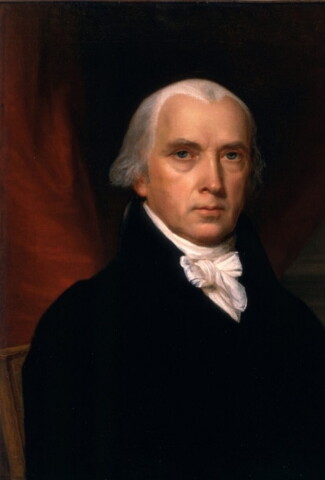
“Equal laws protecting equal rights are . . . the best guarantee of loyalty & love of country.”
James Madison to Jacob De La Motta, August 1820. Image: James Madison by James Vanderlyn, 1816. White House Historical Association.
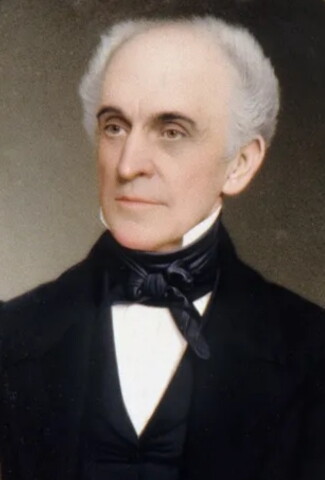
“[Madison] had often intimated his intention, long before he avowed his determination to me, to emancipate them [enslaved people]. . . . He has now died without having freed one.”
Edward Coles to Sarah Coles Stevenson, November 21, 1836. Image: Edward Coles by John Henry Brown, 1852. Winterthur Museum Collection.
Take the quiz once to reveal your true historical nature . . . or take it multiple times to discover the many sides of revolution.
Image: Students performing in the Hamilton Education Program.


Explore the Declaration of Independence with notes that explain the meaning of certain words or phrases in a document, offering historical context and advice on what to look for when reading the document.

This program combines theatrical experiences with rigorous historical study and creative expression to make history engaging and accessible to students.

The Gilder Lehrman Institute is pleased to offer many opportunities for students throughout the year, encouraging the study of American history and supporting students in their career and research goals.