Prince Saunders was an educator who advised post-colonial Haiti.
Like Saunders, you are
- someone who learns from experience
- committed to education
- excited to make new friends
- determined to make a difference in your community

Prince Saunders was an educator who advised post-colonial Haiti.

Healer
“Prince Saunders” by Richard Evans and C. Turner in Haytian Papers, London, 1816. New York Public Library.

Like Saunders, you are

Prince Saunders persuaded people to invest in schools for all children, regardless of race or ability to pay. He was adventurous, disciplined, and creative. You are like Saunders because you can’t see a problem without needing to solve it. You lead even if no one else is ready to follow.
Child of the Revolution • Educator • International Advisor
ca. 1775–1839
Massachusetts
Prince Saunders was born during the American Revolution. His childhood was shaped by a few key factors: he was free, African American, raised within a White New England family, and a good student. He was among the first to be born an “American.”
In adulthood, he extended the Revolution’s legacy by focusing on education and helping Haiti. He became a teacher in Boston and opened at least four schools for African American children. Literacy would create opportunities for active participation in the community and perhaps in government. Like the United States, Haiti had overthrown its colonial government. In Haiti, Saunders organized multiple schools. He published a book about Haitian Emperor Henri Christophe’s decrees. Later, he represented Christophe’s interests in London.
Saunders returned to the United States to encourage African American emigration to Haiti. Some African American leaders, such as James Forten, disagreed with this plan. Regardless, they listened to Saunders and his proposals.
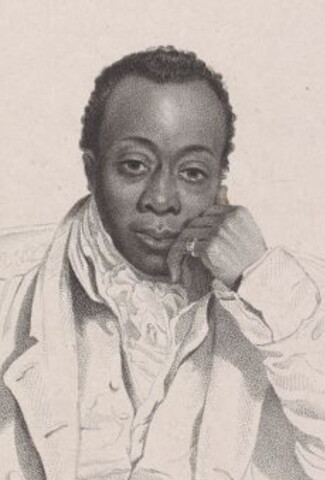
“It is by the wisdom of our conduct, our success in the arts and sciences, that we shall secure the triumph of our respected and illustrious patrons, and confound, forever, the malice and unfounded assertions of our implacable enemies.”
Prince Saunders, Haitian Papers: A Collection of the Very Interesting Proclamations, and Other Official Documents, London, 1816. Image: Richard Evans and C. Turner, “Prince Saunders,” Haitian Papers: A Collection of the Very Interesting Proclamations, and Other Official Documents, London, 1816. New York Public Library.
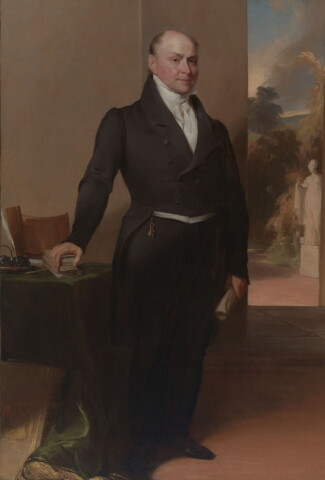
“Mr Sanders took a short walk of half an hour with me before dinner, and dined with me—I had much Conversation with him upon the subject of his visit to Hayti.”
John Quincy Adams’s diary, April 17, 1816. Image: John Quincy Adams by Gilbert Stuart, ca. 1825–1830. Harvard University Portrait Collection, Bequest of Ward Nicholas Boylston to Harvard College.
Take the quiz once to reveal your true historical nature . . . or take it multiple times to discover the many sides of revolution.
Image: Students performing in the Hamilton Education Program.


Explore the Declaration of Independence with notes that explain the meaning of certain words or phrases in a document, offering historical context and advice on what to look for when reading the document.

This program combines theatrical experiences with rigorous historical study and creative expression to make history engaging and accessible to students.

The Gilder Lehrman Institute is pleased to offer many opportunities for students throughout the year, encouraging the study of American history and supporting students in their career and research goals.