Lesson by Alysha Butler
Essay by Ashley Robertson Preston, Howard University
Grade Level: 7–12
Number of Class Periods: 1 or 2
Primary Era: The American Revolution, 1763–1783
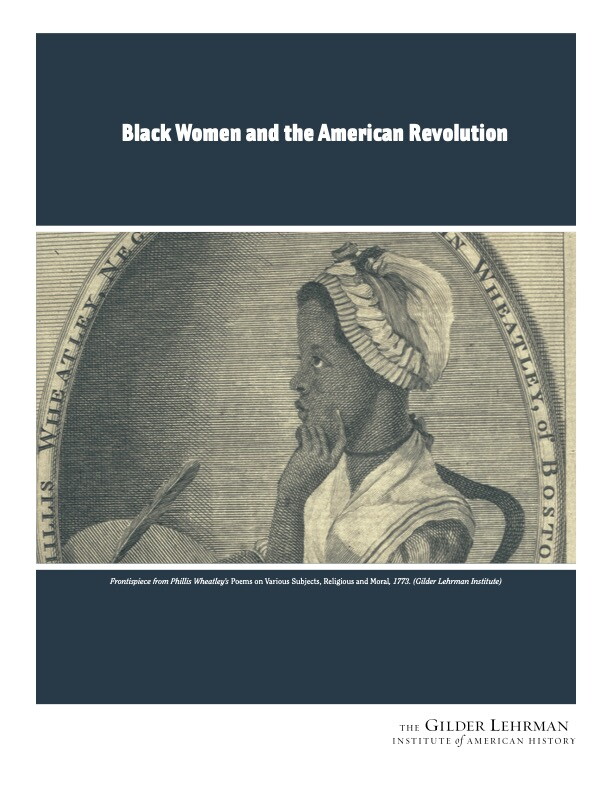
This lesson is designed to help guide students through the exploration of primary and secondary sources that detail the lives of three Black women (two enslaved, one free) who seized the opportunity during the American Revolution to either pursue and secure their own freedom or speak out against the institution of slavery. The lesson will be based upon student analysis of a variety of sources giving Black women visibility in an era where they are rarely discussed in classrooms.
Lesson Plan Author: Alysha Butler
Historical Background Essay by: Ashley Robertson Preston, Howard University
CCSS.ELA-LITERACY.RH.9-10.1: Cite specific textual evidence to support analysis of primary and secondary sources, attending to such features as the date and origin of the information.
CCSS.ELA-LITERACY.RH.9-10.2: Determine the central ideas or information of a primary or secondary source; provide an accurate summary of how key events or ideas develop over the course of the text.
CCSS.ELA-LITERACY.RH.9-10.3: Analyze in detail a series of events described in a text; determine whether earlier events caused later ones or simply preceded them.
How did Black women pursue their own liberty during the American Revolution?
How did Black women’s pursuit of liberty during the Revolution help the young republic better live up to the ideals of the American Revolution?
Why is the story of Black women and the American Revolution essential to understanding the founding era?
Runaway Slave Advertisement, 1783
“Two Guineas Reward,” Rivington’s New-York Gazetteer and Universal Advertiser, December 17, 1783
Phillis Wheatley, “On the Death of General Wooster,” 1778
Massachusetts Constitution, 1780