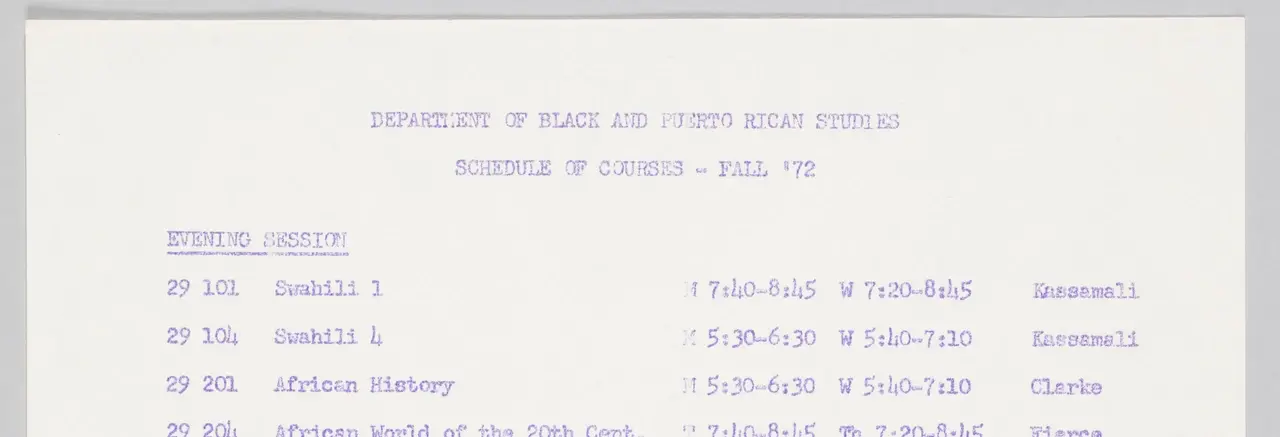
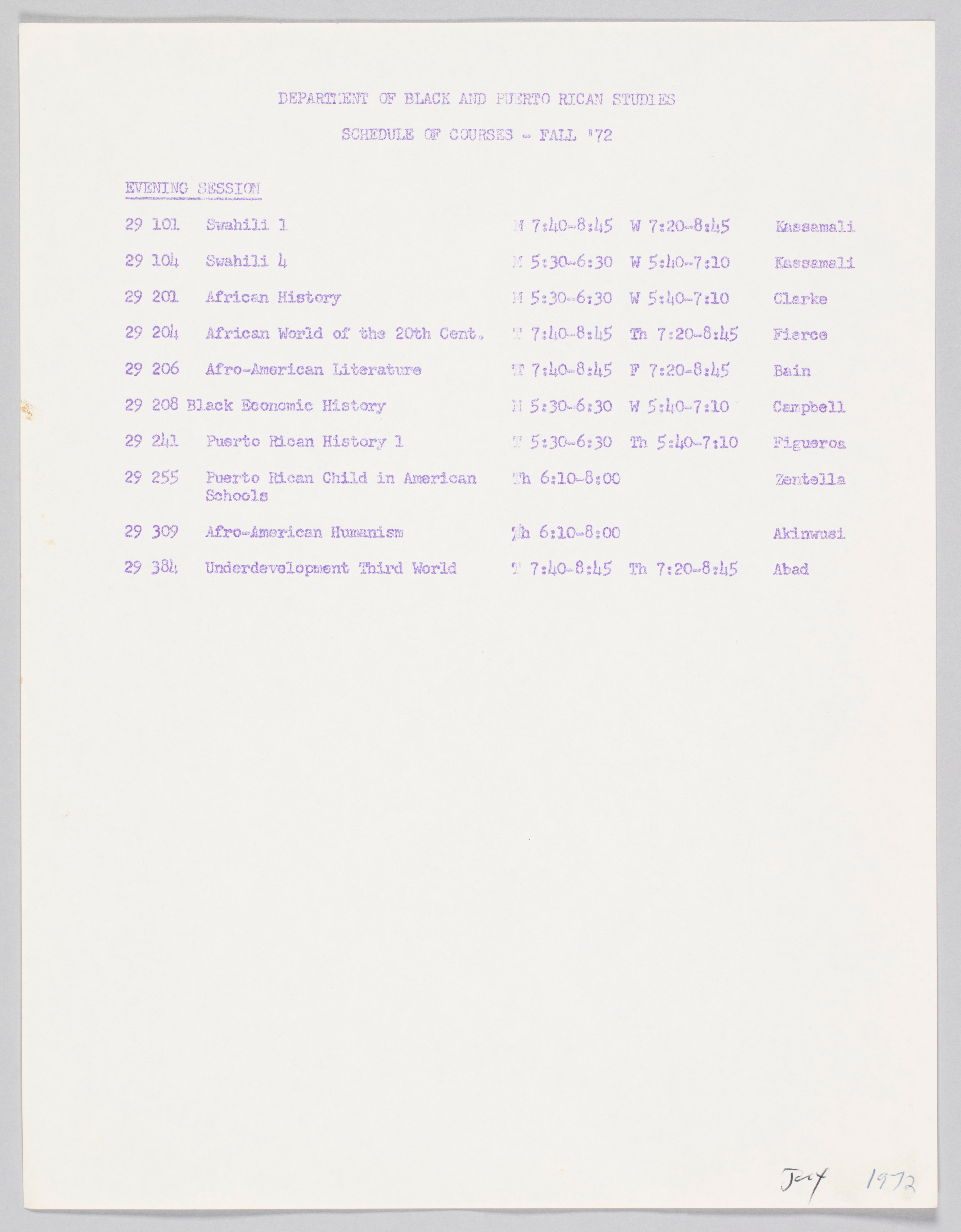
Schedule of Courses for Black and Puerto Rican Studies at Hunter College in New York City, July 1972 (Collection of the Smithsonian National Museum of African American History and Culture)
Source: Schedule of Courses for Black and Puerto Rican Studies at Hunter College in New York City, July 1972 (Collection of the Smithsonian National Museum of African American History and Culture).
Discussion Questions
What did Hunter College’s decision to pair Black and Puerto Rican experiences in “Black and Puerto Rican Studies” suggest about professors’ goals for the academic program? Relatedly, what significance do you attribute to professors’ decision to describe the area of study as “Black” rather than “African American”?
What stands out to you about the variety of courses offered?
Look at the top of the document, which notes the date when professors offered the listed courses. What does this suggest about who took the courses? What does this date suggest about the program’s goals and intended audience?