
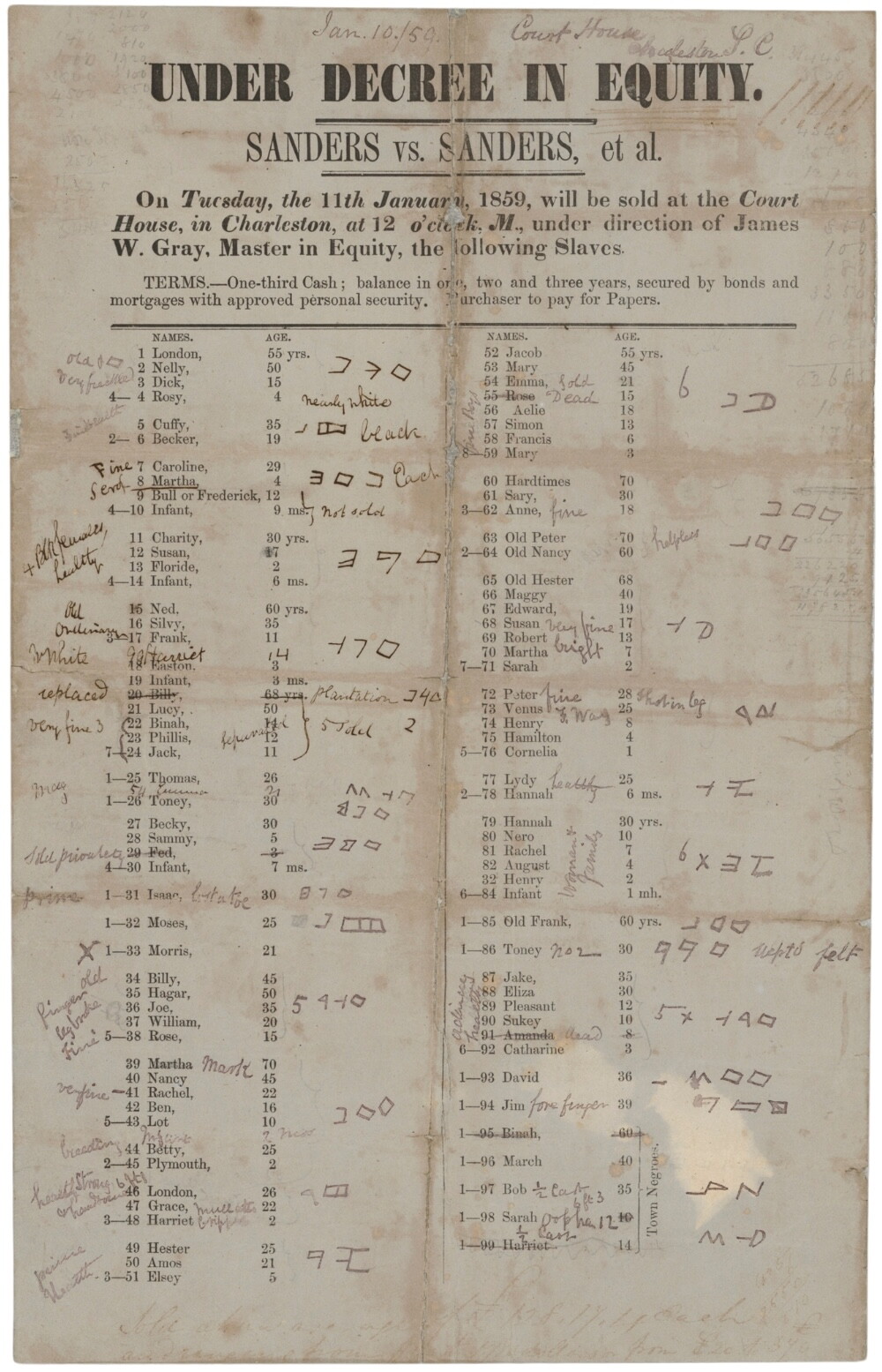
Broadside for an auction of enslaved men, women, and children at the Charleston courthouse in 1859 (Collection of the Smithsonian National Museum of African American History and Culture)
Discussion Questions
- How can the information contained in this broadside be used to reconstruct the lives of enslaved people? Conversely, what descriptions or silences require critical consideration?
- What do the descriptions of Madora and Phoebe have in common? Why is this included alongside occupational information?
- What does the text of the broadside tell you about the process by which enslaved persons were sold?