David McCullough Essay Prizes

David McCullough Essay Prizes

The 2026 Contest is now open!

High school students in our Affiliate School Program are encouraged to participate in the prestigious David McCullough Essay Prizes competition.


Submit your entry via our contest entry form, accessible via the button below. Submissions will be accepted through June 22, 2026, at 8:00 p.m. ET.


Image: David McCullough at Trinity School in Manhattan, October 15, 2019
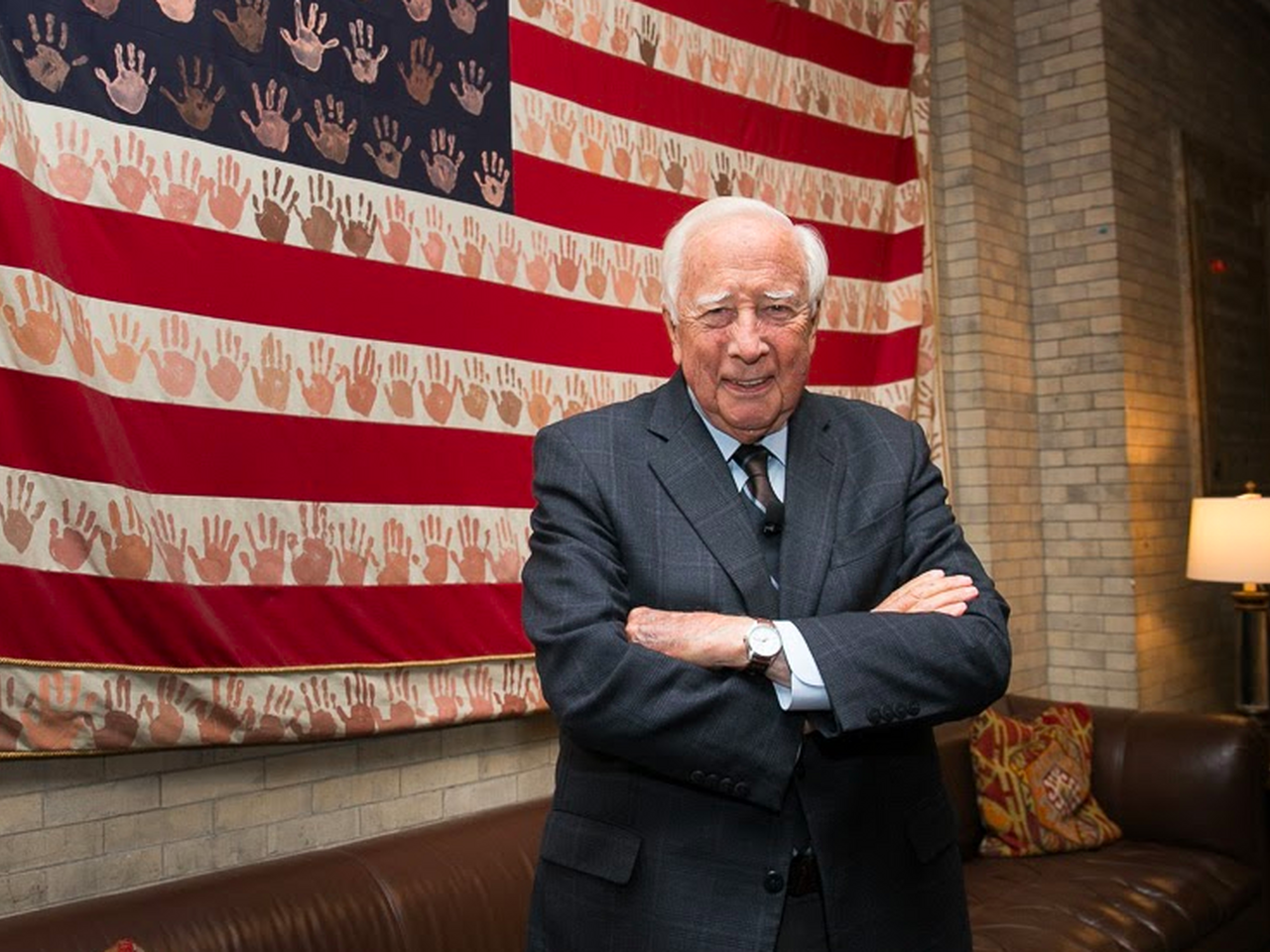
Author David McCullough at Trinity School in Manhattan, October 15, 2019
  • $5000 1st Prizes

  • $1500 2nd Prizes

  • $500 3rd Prizes

An Essay Competition Honoring a Master Storyteller

This contest is named in memory of David McCullough (1933–2022)—a Pulitzer Prize–winning historian and Gilder Lehrman Life Trustee—and honors his career telling America’s stories and examining its histories.

Learn more about his life and legacy

About the Contest

Essay Types

Interpretive Essay

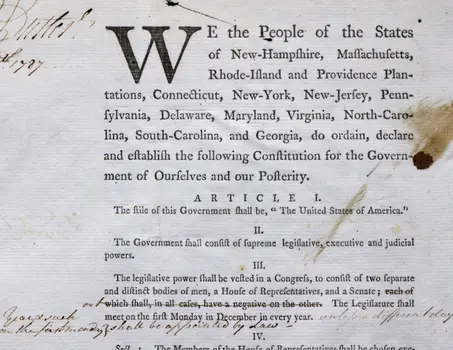
Students are invited to submit an interpretive essay focusing on close reading and analysis of one primary source from American history, 1491 to 2001, in the Gilder Lehrman Collection of more than 87,000 historical documents.

Image: Letter from Edward Carrington to Henry Knox, March 13, 1788. (The Gilder Lehrman Institute, GLC02437.03821)

Research Essay

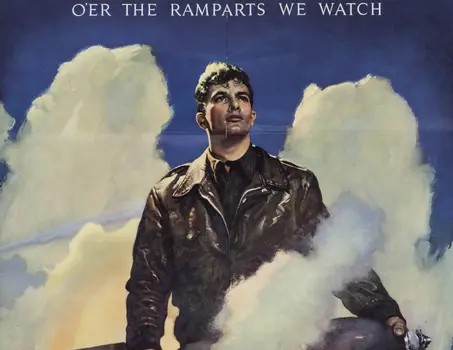
Students are invited to submit a research essay incorporating primary and secondary sources on a topic in American history from 1491 to 2001.

Image: Edward George Renesch, Colored Man Is No Slacker, Chicago, 1918. (The Gilder Lehrman Institute, GLC06134)

Eligibility

High school students attending schools in the Gilder Lehrman Affiliate School Program are eligible and encouraged to participate. They are invited to submit an original essay, written independently or for a current academic year class, that has been revised, expanded, and adapted to conform with the McCullough Prize specifications.

Awards

All participants will receive a certificate of participation suitable for framing. Prize winners in each of our two categories—research essays and interpretive essays—will receive cash awards as follows:

  • 1st Prize: $5,000 (plus a $500 prize awarded to the school)
  • 2nd Prize: $1,500 (plus a $500 prize awarded to the school)
  • Five 3rd Prizes: $500 each

Font and Page Style

Papers should be submitted in 12-point, Times New Roman font with one-inch margins at the top, bottom, and sides. Essays should be free of teacher commentary or other notes.  

The accepted document types are PDF, DOC, DOCX, and ODT.

Organization

Top essays have an introduction, body, and conclusion and a clearly stated, well-developed thesis statement with supportive historical evidence. In addition to a bibliography or works cited page, essays must include internal citations. 

The suggested word count for interpretive essays is 750–1,000 words. The suggested word count for research essays is 1,500–2,500 words. 


AI Policy

As of January 2026, AI tools may be used sparingly in the creation of your submission to the David McCullough Essay Prizes. All essays that make it to the finalist round will be reviewed for AI use. We highly recommend you document your writing process in the event that reviewers have concerns about your work’s originality.

GLI’s aim with its AI policy is to ensure that students submit single-authored essays in which they elevate and center their own ideas about and analysis of primary and secondary sources. These essays should be produced in a particular, scholarly fashion: topic selection, locating sources, reading and analyzing sources, and outlining, drafting, and revising a paper.

Permitted forms of AI use

  • You may use AI as a brainstorming helper roughly equivalent to talking with a friend or teacher. Getting ideas for a topic is fine, but borrowing a thesis or interpretation of sources is not, even if you think that you might have eventually developed these ideas on your own.
  • You may use AI assistance to locate a portion of your primary and secondary sources, but you must also find a portion of your sources outside of an AI search.
  • You may use an AI such as Grammarly for proofreading and light grammatical editing and revising.
  • When reporting on which primary and secondary sources you used in your essay, you must write your own bibliography; we recommend creating an annotated bibliography and tracking where each of your sources came from as you research and write your paper.

To ensure that your paper is your own work

  • You may not use AI to develop or write your thesis statement.
  • You may not use AI to help outline your essay.
  • You may not use AI to review the quality and ideas of paragraph or paper drafts.
  • You may not use AI to produce a drafted paper, regardless of what you do with that draft in terms of revisions or rejections. 
  • Every citation and quotation in your essay should be from a source you have personally read and would be comfortable discussing with reviewers. 

Evaluation

A panel of Gilder Lehrman master teachers will choose the pool of finalists, from which a jury of eminent historians will choose the winners. Essays will be evaluated for their historical rigor, the clarity and correctness of their style, their use of evidence, and their qualities of empathy and imagination. 

Start Your Research Here 

Essays can be on any topic related to American history from 1491 to 2001. Essays in the interpretive category must feature a primary source (letter, broadside, art, political cartoon, speech, etc.) from the Gilder Lehrman Collection.

In 1991, Richard Gilder and Lewis E. Lehrman embarked on a mission to create one of the most important repositories of historical American documents in the country. Today, the Gilder Lehrman Collection contains 87,000+ items documenting the political, social, and economic history of the United States.

Explore the Collection

Congratulations to the 2025 Winners!

A panel of Gilder Lehrman master teachers selected the pool of finalists from 753 submissions, from which a jury of eminent historians selected the winners. A total of 358 schools participated in the 2025 competition from 36 US states, Washington, DC, Thailand, the United Kingdom, Canada, Bangladesh, Myanmar, India, Kazakhstan, Taiwan, Pakistan, China, Turkey, and Korea. Essays were evaluated for their historical rigor, clarity, correctness of style, use of evidence, empathy, and imagination. 

2025 Interpretive Category Essay Winners

Interpretive Category

Place Name Essay Title School State
1st Victor Casado “The Precedent of Power” Christopher Columbus High School FL
2nd Clementine Ho "‘A Nuisance to Civilization’: Analyzing Anti-Chinese Rhetoric in Gilded Age San Francisco” The Nightingale-Bamford School NY
3rd Matt Angeles “President Franklin Roosevelt’s 1936 Address at Chautauqua: The Peace Speech That Prepared for War” Innovation Early College High School NC
3rd Reeva Chopra “The American Dream and the American Negro-Baldwin” Invictus International School Amritsar India
3rd Austin Hsu “Disguised Reform: How U.S. Law Was Used to Erase Native Sovereignty” Redmond High School WA
3rd Paul Sparacello “Buried by the People: The Fall of the Coffin Handbill and the Rise of Jacksonian Democracy” Jesuit High School LA