
From the Editor
In this issue our contributors look at a variety of figures who helped shape our nation’s economy. Some, like Alexander Hamilton and John D. Rockefeller, will be familiar to all our readers; others will be new to many of you. But each essay offers a portrait of a man or woman who left a lasting impact on the economic trajectory of the United States and the institutions that sustain its growth. Whether you judge their actions favorably or unfavorably, you will find these were Americans who made history through their impact on our economic system.
In his essay on Alexander Hamilton, historian Richard E. Sylla focuses on the two fundamental contributions of this immigrant from the West Indies. Troubled by the failure of the existing Congress to adequately fund the military during the Revolutionary War, Hamilton applied his remarkable genius to understanding what changes had to be made in economic policies—and as secretary of the treasury under Washington he made them. Sylla details Hamilton’s two major contributions: launching a modern financial system for the young republic and moving the economy from its agricultural base to manufacturing and commerce. Sylla shows that Hamilton studied both the Dutch and British financial revolutions and this led him to support replacing the Articles of Confederation with a more empowered Constitution. Once the new government was in place, Secretary Hamilton worked tirelessly to bring about an American financial revolution. In his reports to the president and the new Congress, he advocated, among other things, a national currency, a banking system, and policies that strengthened commerce and trade over agriculture. Reading this essay, one is likely to conclude that, if Washington was the father of the country, Hamilton gave birth to that country’s economic trajectory.
As Chandler B. Saint shows us, Venture Smith was the model of the self-made man that our economic system makes possible. Smith was born the son of an African king but came to America in the chains of the slave trade in 1738. His New England masters taught him English, and he became an eloquent speaker of his adopted tongue and a skilled writer as well. Filled with ambition and willing to work hard, Smith managed by buy his own freedom and the freedom of his wife and children. He went on to be an unshakeable patriot and a successful businessman. He became a landowner in Connecticut, slowly acquiring enough acreage to enter the voting rolls as a freeholder. By 1776 he was one of the first African-born citizens of the new nation. His success rested on his wisdom in diversifying his crops and cutting out the middleman by selling them directly to consumers. His wealth grew accordingly. When he died he was buried with honors by his White neighbors, friends, and business associates, remembered by them as a Founding Father in the new republic.
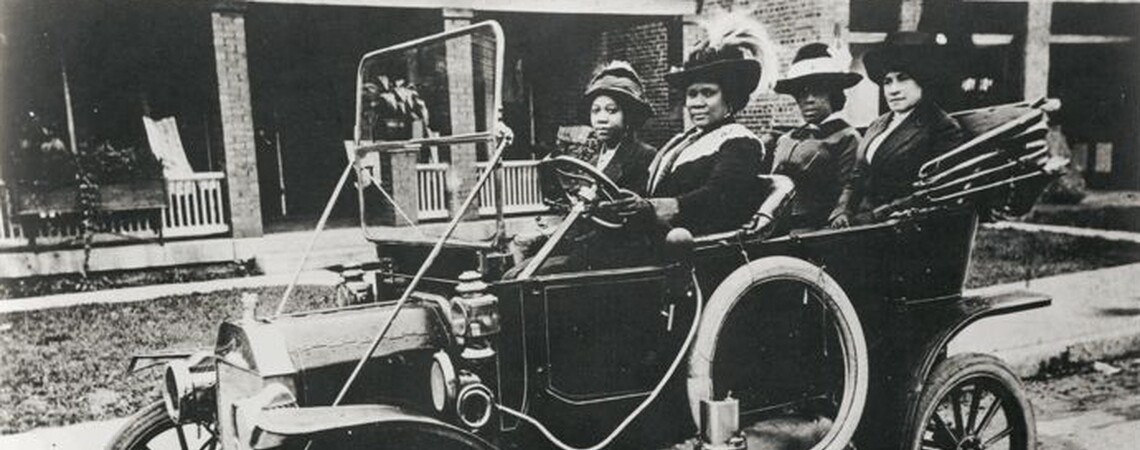
Tyrone McKinley Freeman shows us another self-made American, this time a woman entrepreneur of the nineteenth and early twentieth centuries. In “More than a Millionaire,” Freeman provides a portrait of the first self-made woman millionaire, Sarah Breedlove, better known as Madam C. J. Walker. Walker began her work life as a washerwoman and rose to become, as the author puts, it a “beauty culture mogul.” She used her influence as the owner of a network of beauty schools to educate generations of beauty salon owners and workers, offering a curriculum that included physiology and hygiene, anatomy, and the study of scalp disease as well as the skills needed to operate a business. Since her earliest days, she had been a philanthropist, helping in the small ways she could the neediest in her community. With her success, she expanded her philanthropic reach, often lending money to graduates of her school to open their own businesses. Freeman rejects the simple rags-to-riches label. Walker was helped along the way by women of her community—and she acknowledged this. Once she succeeded, she worked with organizations in the larger Black community like the National Association of Colored Women, fighting Jim Crow laws that discriminated based on race.
In “The Lives of Andrew Carnegie,” Gordon Hutner provides a rich portrait of a controversial nineteenth-century businessman. Lauded by some for his “rags to riches” story, admired for his remarkable successes as a steel magnate and for his innovative vertical organization of his company, Carnegie was criticized by others as a ruthless industrialist, an exploitative monopoly capitalist, and a fierce anti-labor employer who used violence against workers hoping to unionize. But what he is now remembered for is not his rise to wealth and power or his contempt for the people he crushed in the process, but for his widespread philanthropy. Although he embraced the responsibility of the wealthy to be charitable to others early in his life, his commitment to giving away his fortune grew to define him in old age. Upon retirement, he endowed a pension fund for steelworkers he had once used armed Pinkerton men to crush. He also endowed a remarkable 2,811 free public libraries, parks, and public swimming pools, and arranged for thousands of churches to receive organs. His Carnegie Foundation for the Advancement of Teaching embraced college professors despite his lack of admiration for academic life. To support scientific research he created Carnegie Tech and Carnegie Mellon University.
In his essay, “‘The Power to Make Money Is a Gift from God,’” Grant Segall follows John D. Rockefeller, the son of a snake-oil salesman who made his way to amassing the biggest fortune of the Gilded Age. Rockefeller showed early signs of having the “gift” for making money, selling candy to his siblings and lending money at interest to his neighbors. As an adult, he built an economic empire, and in the process he modernized, centralized, and globalized American industry. At the center of his empire was Standard Oil, built by drilling wells, controlling supplies, underselling competitors, using spies, laying pipelines to bypass railroads, and forbidding his employees—whom he considered well paid—to form unions. He was undoubtedly a business genius, but his reputation was marred by the use of guards like those who, in 1914, killed twenty-one striking workers including women and children. In 1911, the monopoly he created was ended by the Supreme Court, which broke Standard Oil into thirty-four companies. Rockefeller’s last decades were defined by philanthropy. He founded the University of Chicago, Rockefeller University, and the Rockefeller Foundation. To some, he is remembered and honored for his philanthropy; to others, he remains the epitome of the robber barons of the Gilded Age.
In our last essay, “The Making of a Great Nation: Anna Rosenberg’s Social Equality Through Economic Opportunity,” Christopher C. Gorham introduces us to a “lost lady” of twentieth-century economic policy. Rosenberg, an immigrant from Hungary, served as an advisor and representative of presidents from FDR to Lyndon B. Johnson. She helped Roosevelt win the governor’s seat in New York and, once he was president, she served him as the only female regional director of the National Recovery Administration and Social Security. Under Truman, she was the first recipient of the Medal of Freedom, and she later served as assistant secretary of defense during the Korean War. She advised both Eisenhower and Johnson on policy issues. Rosenberg’s guiding philosophy was that public policy ought to improve the lives of Americans, and her guiding principle was equality. She firmly believed that real improvements in the lives of everyday Americans, and lasting social fairness, could only come from access to greater economic opportunity. During World War II, she became an advocate for programs like the creation of child-care facilities so that women could move into the jobs left by men serving in the military. By the 1950s, as assistant secretary of defense for manpower, Rosenberg ordered the desegregation of the military base schools in the South and opened up military service to a great number of women. Why, then, Gorham asks, has Rosenberg been forgotten? Because, he argues, she refused to preserve her contributions in a memoir or autobiography. But he notes other factors as well: she was a Jewish woman, who spoke with a mix of a Bronx and a Hungarian accent, and thus she faced sexism and antisemitism in the male-dominated world in which she operated.
As always, the Gilder Lehrman Institute has provided additional materials that illuminate the theme of the issue, including past issues of History Now and episodes of Book Breaks as well as spotlighted primary sources from the Gilder Lehrman Collection. The issue’s special feature is a trio of Gilder Lehrman resources on the life and financial genius of Alexander Hamilton: a timeline, “Alexander Hamilton and the Founding of the United States,” and two online exhibitions, Alexander Hamilton: The Man Who Made Modern America and Alexander Hamilton Establishes the US Economy.
Nicole, Melissa, and I wish you happy holidays!
Carol Berkin, Editor, History Now
Presidential Professor of History, Emerita, Baruch College & the Graduate Center, CUNY
Nicole Seary, Associate Editor, History Now
Senior Editor, The Gilder Lehrman Institute of American History
Melissa Reyes, Contributing Editor, History Now 77
Dartmouth College, Class of 2025
Related Resources
SPECIAL FEATURE
A trio of Gilder Lehrman resources on the life and financial genius of Alexander Hamilton:
“Alexander Hamilton and the Founding of the United States,” a timeline
“Alexander Hamilton: The Man Who Made Modern America,” an online exhibition
“Alexander Hamilton Establishes the US Economy,” an online exhibition
ISSUES OF HISTORY NOW
History Now 72, “Black Entrepreneurship in America” (Fall 2024)
History Now 54, “African American Women in Leadership” (Summer 2019)
History Now 44, “Alexander Hamilton in the American Imagination” (Winter 2016)
History Now 24, “Shaping the American Economy” (Summer 2010)
BOOK BREAKS
“Samuel Ringgold Ward: A Life of Struggle” with Richard J. M. Blackett (June 25, 2023)
“Free Market: The History of an Idea” with Jacob Soll (January 29, 2023)
“Franchise: The Golden Arches in Black America” with Marcia Chatelain (May 22, 2022)
INSIDE THE VAULT
Black Land Ownership and the American Dream in the Jim Crow Era (March 6, 2025)
OTHER VIDEOS
SPOTLIGHTS ON PRIMARY SOURCES
Alexander Hamilton’s “gloomy” view of the American Revolution, 1780
Hamilton’s Report on the Subject of Manufactures, 1791
“Jefferson is in every view less dangerous than Burr”: Hamilton on the election of 1800
Lowell Mill Girls and the factory system, 1840
John Mosby on the silver issue, 1895
Anti-corporate cartoons, ca. 1900
Triangle Shirtwaist Factory fire, 1911
Herbert Hoover on the Great Depression and New Deal, 1931–1933
“Reelect Roosevelt—Friend of Labor,” 1936
Preventing labor discrimination during World War II, 1942


